
Before you go · while you are there
Travel Safety in Nepal
The numbers we give every traveller before they leave Kathmandu — emergency lines, embassies, and how to read altitude before it reads you.
If something is happening right now
Emergency numbers
These short numbers work from any phone in Nepal, including a foreign SIM in roaming. Save them before you leave the city — mountain coverage is patchy, and searching for a number is the last thing you want to be doing.
Rescue and treatment
Medical help in Kathmandu
Two of these are where foreign embassies send their own staff. If you come off a trek unwell, go to one of them rather than to the nearest hospital.
Himalayan Rescue Association Nepal
Runs the aid posts at Manang, Pheriche and Everest Base Camp, and sets the standing advice on altitude illness in Nepal. Call the Kathmandu office before a trek if you have a condition you are unsure about.
Dhobichaur, Lazimpat, Kathmandu 44600
+977 1 4540292+977 1 4540293
CIWEC Hospital & Travel Medicine Center
The travel-medicine hospital most embassies use. Open around the clock, and far better than a general hospital at trekking injuries, gut infections and altitude illness.
Kapurdhara Marg, Kathmandu 44600
+977 1 4524111+977 1 4524242 · +977 1 4535232
Nepal International Clinic
A small, long-established travel clinic near Durbar Marg. Good for vaccinations, pre-trek check-ups and anything that is not an emergency.
47 Lal Durbar Marg, Kathmandu
+977 1 4434642+977 1 4435357
Nepal Red Cross Society (National HQ)
Blood bank and nationwide ambulance coordination. The 1130 hotline reaches them directly.
Redcross Marg, Kalimati, Kathmandu
+977 1 5370650+977 1 5372761 · Hotline 1130
If you lose a passport — or worse
Embassies in Kathmandu
Ten missions, in the order we are asked for them. A consulate can replace a passport, contact your family and visit you in hospital. It cannot pay your bills or fly you home for free — that is what insurance is for.
Germany
Gyaneshwor Marga 690, Gyaneshwor, Kathmandu
+977 1 441278624-hour line +977 9851137943
France
302 Narayan Gopal Sadak, Lazimpat, Kathmandu
+977 1 4512332Russia
Baluwatar, Kathmandu
+977 1 441215524-hour line +977 9801047187
Checked against each mission’s own website on 2 August 2026. Diplomatic numbers do change — where we could not reach the official site, the card says so, and you should confirm before relying on it.
The one that actually hurts people
Altitude sickness — read it early
Above roughly 2,500 m almost everyone feels something. It is not a sign of weakness or poor fitness — the fittest person in a group is often the one who climbs too fast. What matters is not whether you feel it, but whether it is getting worse.
Mild — acute mountain sickness
What it looks like
- Headache that still responds to painkillers
- Poor appetite, mild nausea
- Broken sleep and vivid dreams
- More tired than the day’s walking warrants
What to do
Stop going up. Rest at the same altitude, drink, eat, take paracetamol or ibuprofen. If you are genuinely better the next morning, carry on — slowly. If you are the same or worse, go down.
Moderate — AMS that is not resolving
What it looks like
- Headache that painkillers no longer touch
- Vomiting
- Dizziness, unsteadiness
- Unable to eat, heavy fatigue even at rest
What to do
Descend. Five hundred to a thousand metres is usually enough, and the difference is often felt within the hour. Do not wait for morning and do not go up “just to the next lodge”. Tell your guide — reading this is their job, and they will not think less of you.
Severe — HACE and HAPE, life-threatening
What it looks like
- Staggering, unable to walk a straight line (HACE)
- Confusion, strange behaviour, drowsiness (HACE)
- Breathless at rest, crackling breathing (HAPE)
- Cough with froth or pink sputum; blue lips or fingertips
What to do
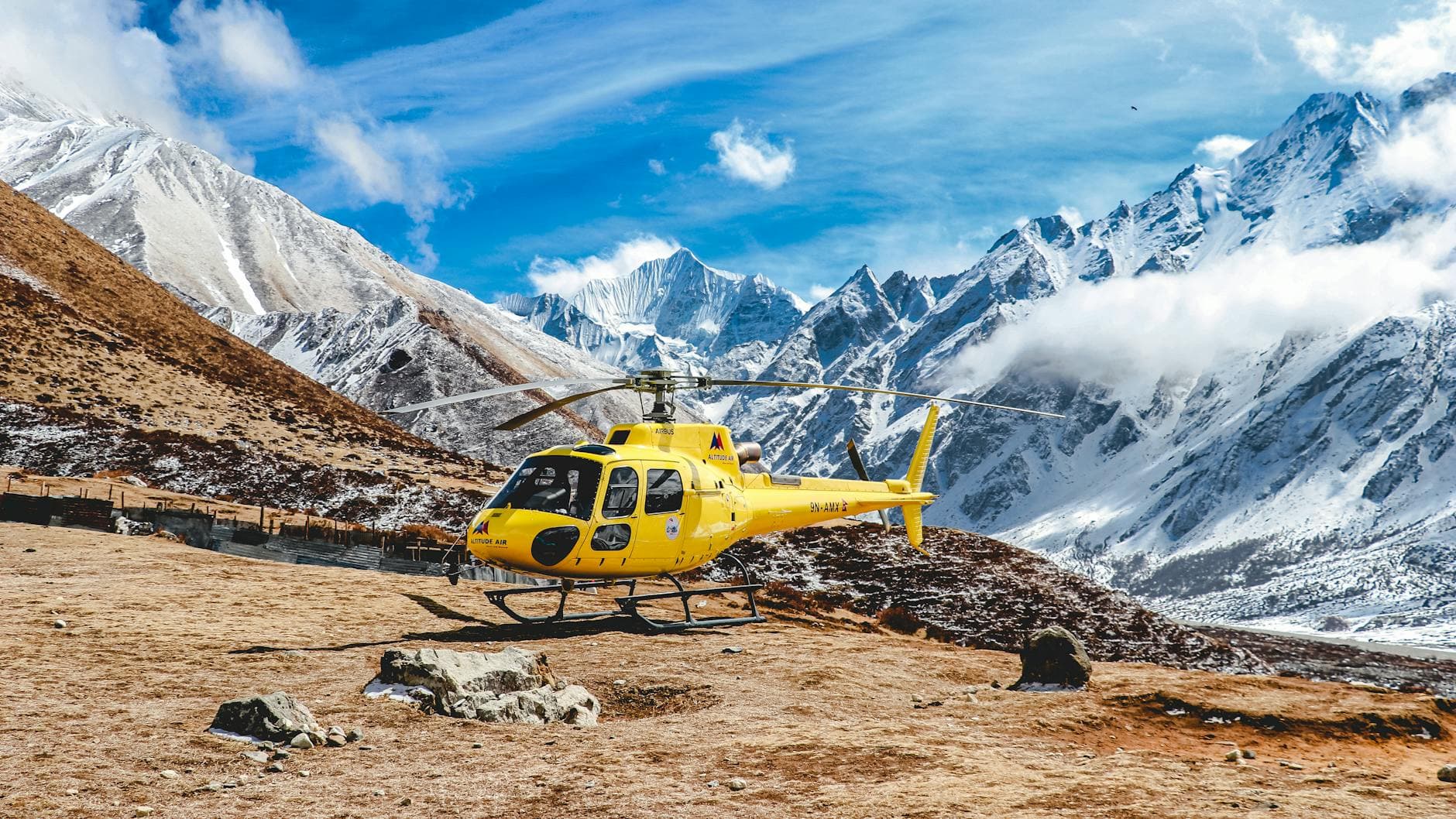
Descend immediately — that night, with someone helping. Give oxygen or use a portable pressure bag if the group carries one, and call for helicopter evacuation. People die of these within hours. Nothing on any itinerary is worth it.
Descent is the cure
There is no drug, no oxygen bottle and no night’s rest that substitutes for going down. Everything else buys time to descend safely — that is all it does. When in doubt, go down. You can always come back up.
Climb high, sleep low
Above 3,000 m, gain no more than 300–500 m of sleeping altitude a day and take a rest day roughly every 1,000 m. Walking higher during the day and returning to sleep lower is good for you. Every itinerary we run is built around this — if a schedule looks too fast on paper, it is.
About Diamox (acetazolamide)
Acetazolamide can help you acclimatise and many trekkers use it. It is a prescription drug: speak to your own doctor before the trip — not to a pharmacy in Thamel, and not to us. Ask specifically about the sulfa-allergy question, the dose, and the tingling fingers and frequent urination it causes, so that neither alarms you at 4,000 m. It is not a licence to climb faster, and it does not treat HACE or HAPE. Only descent does.
This is education, not medical advice
We are guides, not doctors. This page reflects the standing advice of the Himalayan Rescue Association and what thirty years on the trail has taught our family. It cannot account for your history, your medication, or what is actually happening to you on the day. See a travel-medicine doctor before you travel, and a real clinician if you are ill.
The paperwork that matters
Insurance — check the altitude, then check the helicopter
A helicopter evacuation from the Khumbu runs into thousands of US dollars, and the operator will want a guarantee of payment before lifting. Standard travel insurance very often excludes the one thing you would need it for.
We put the maximum altitude of your trip in writing before you book, so you can give your insurer a real number rather than a guess.
Insurance AdviceAsked before every departure
Questions we get every season
What is altitude sickness?
Acute mountain sickness is what happens when you gain height faster than your body can adjust to thinner air. It usually starts above 2,500 m with a headache, poor appetite and broken sleep. In its severe forms — HACE, fluid on the brain, and HAPE, fluid in the lungs — it is life-threatening and can kill within hours.
How do I avoid altitude sickness in Nepal?
Ascend slowly. Above 3,000 m, gain no more than 300–500 m of sleeping altitude per day and take a rest day roughly every 1,000 m. Drink well, eat even when you do not feel like it, avoid alcohol and sleeping pills at altitude, and walk high during the day but sleep lower. Fitness does not protect you — pace does.
Should I take Diamox for trekking in Nepal?
That is a decision for your own doctor, not for a guide or a pharmacy counter in Thamel. Acetazolamide can genuinely help you acclimatise, but it is a prescription drug with a sulfa-allergy caution and side effects — tingling fingers and frequent urination — that you want to know about in advance. It does not treat HACE or HAPE, and it is never a reason to climb faster.
How far do I need to descend with altitude sickness?
For moderate symptoms, 500 to 1,000 metres is usually enough, and travellers often feel the difference within an hour. For suspected HACE or HAPE, descend immediately and as far as you safely can, that same night, with someone accompanying you, and arrange helicopter evacuation. Descent is the only real treatment; oxygen and pressure bags buy time to descend, nothing more.
Do I need special travel insurance for trekking in Nepal?
Yes. Ordinary travel insurance frequently caps trekking cover at 3,000 or 4,000 metres, which is below most Nepal itineraries, and often excludes helicopter evacuation — the one thing you are insuring against. Check that your policy names your maximum altitude, covers helicopter evacuation and repatriation explicitly, and gives you a 24-hour number reachable from Nepal.
Ask us anything
Talk to us before you worry about it
A safety question is never a silly one. Message the family directly — same-day reply, every day.