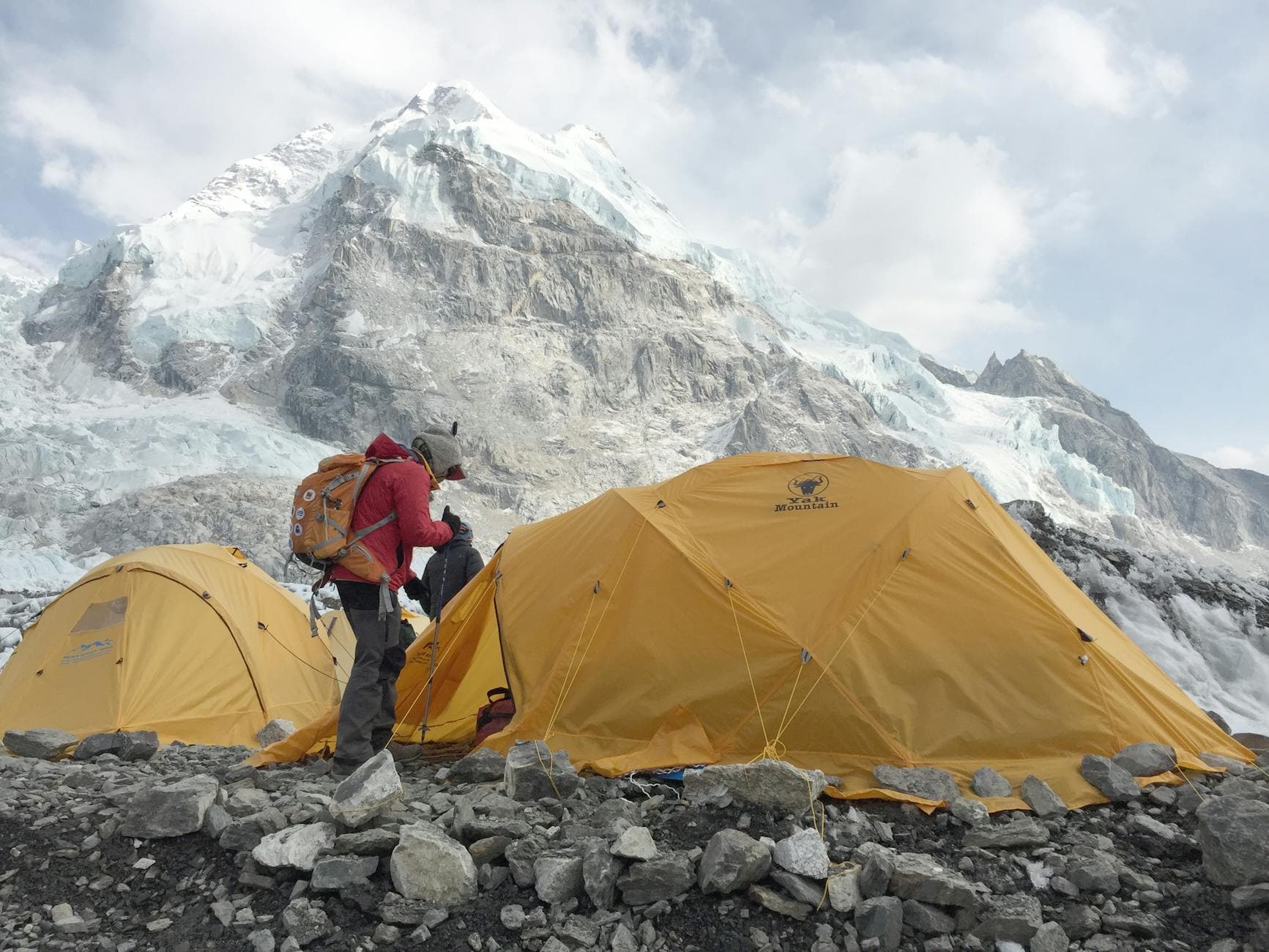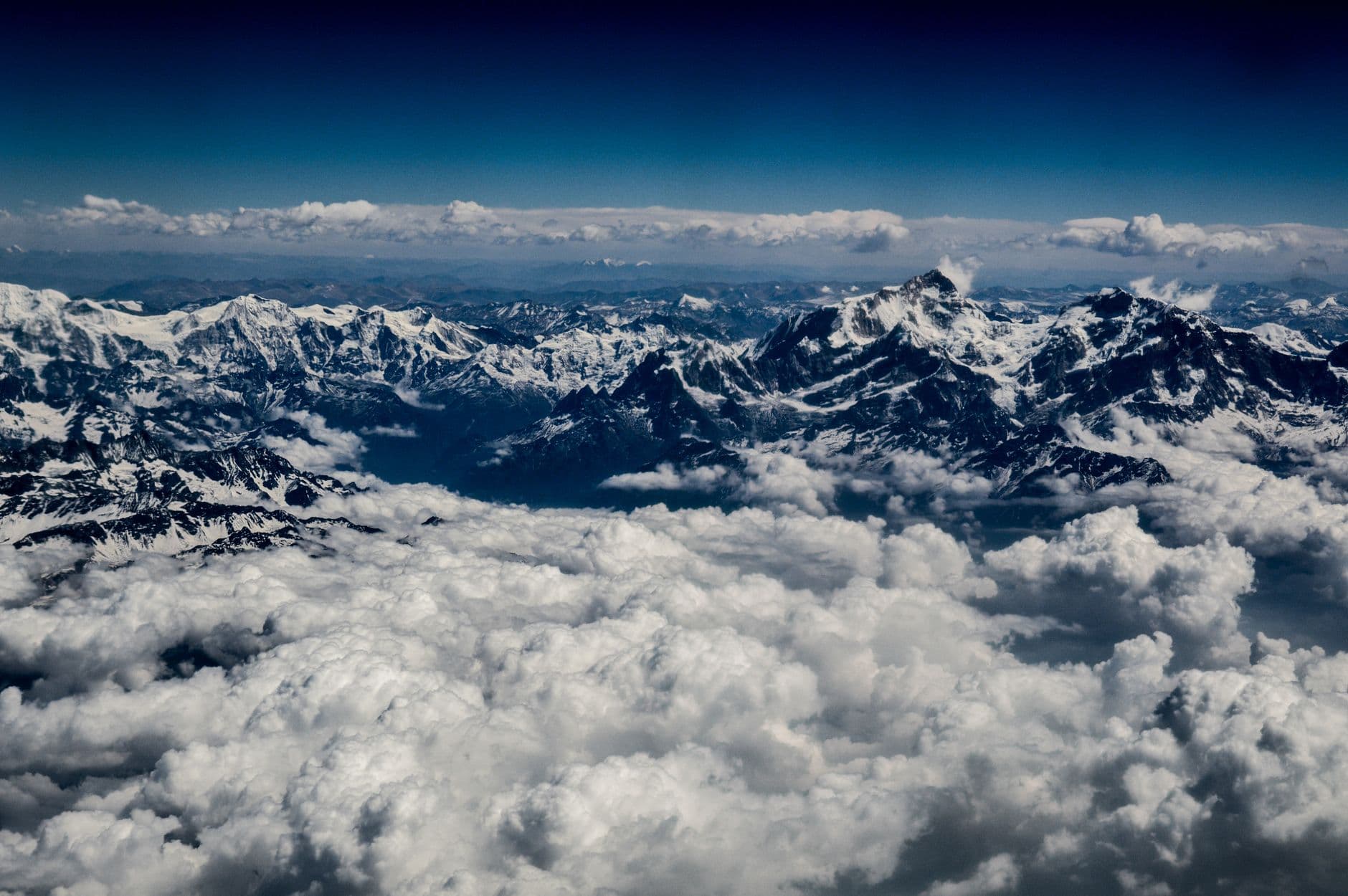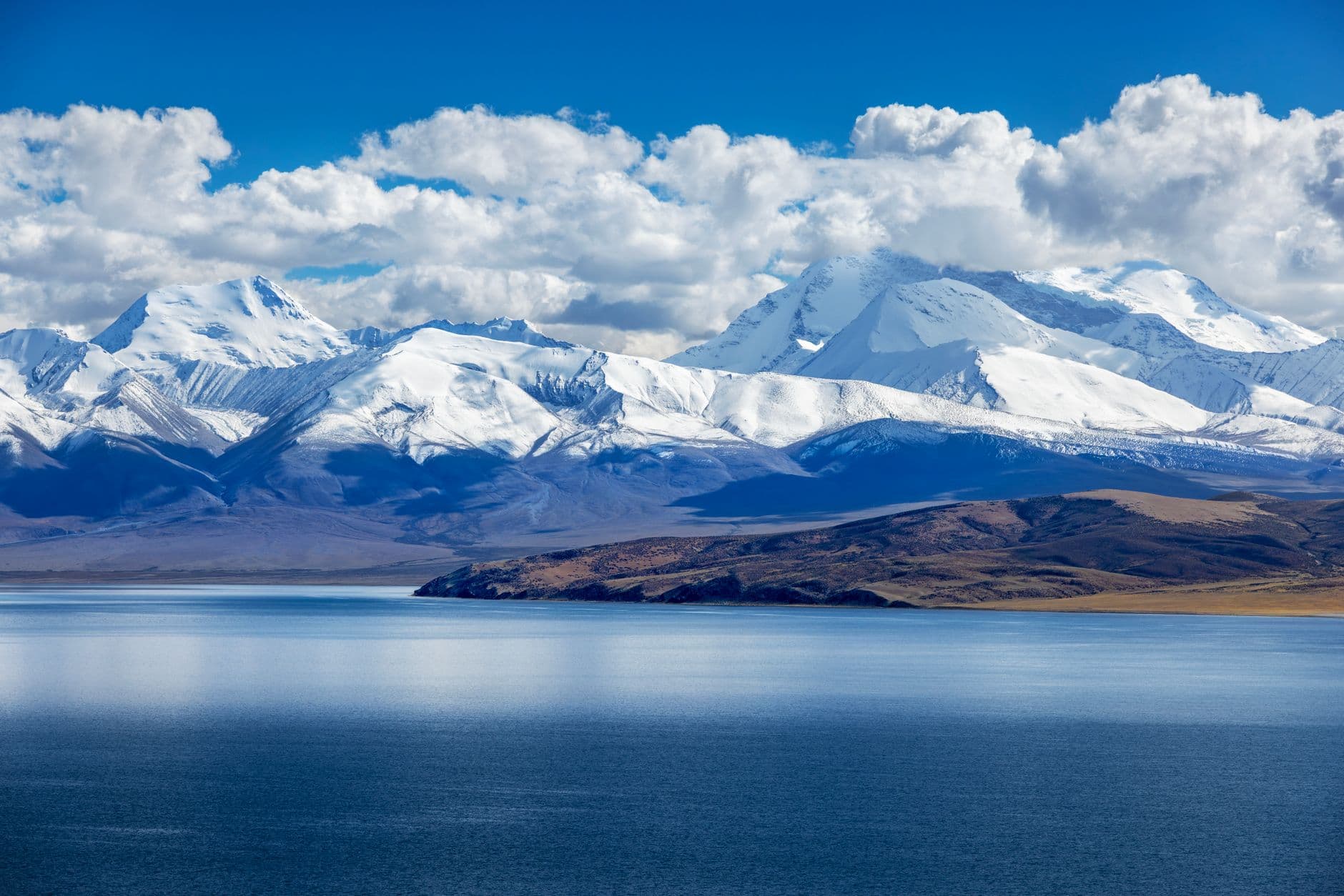
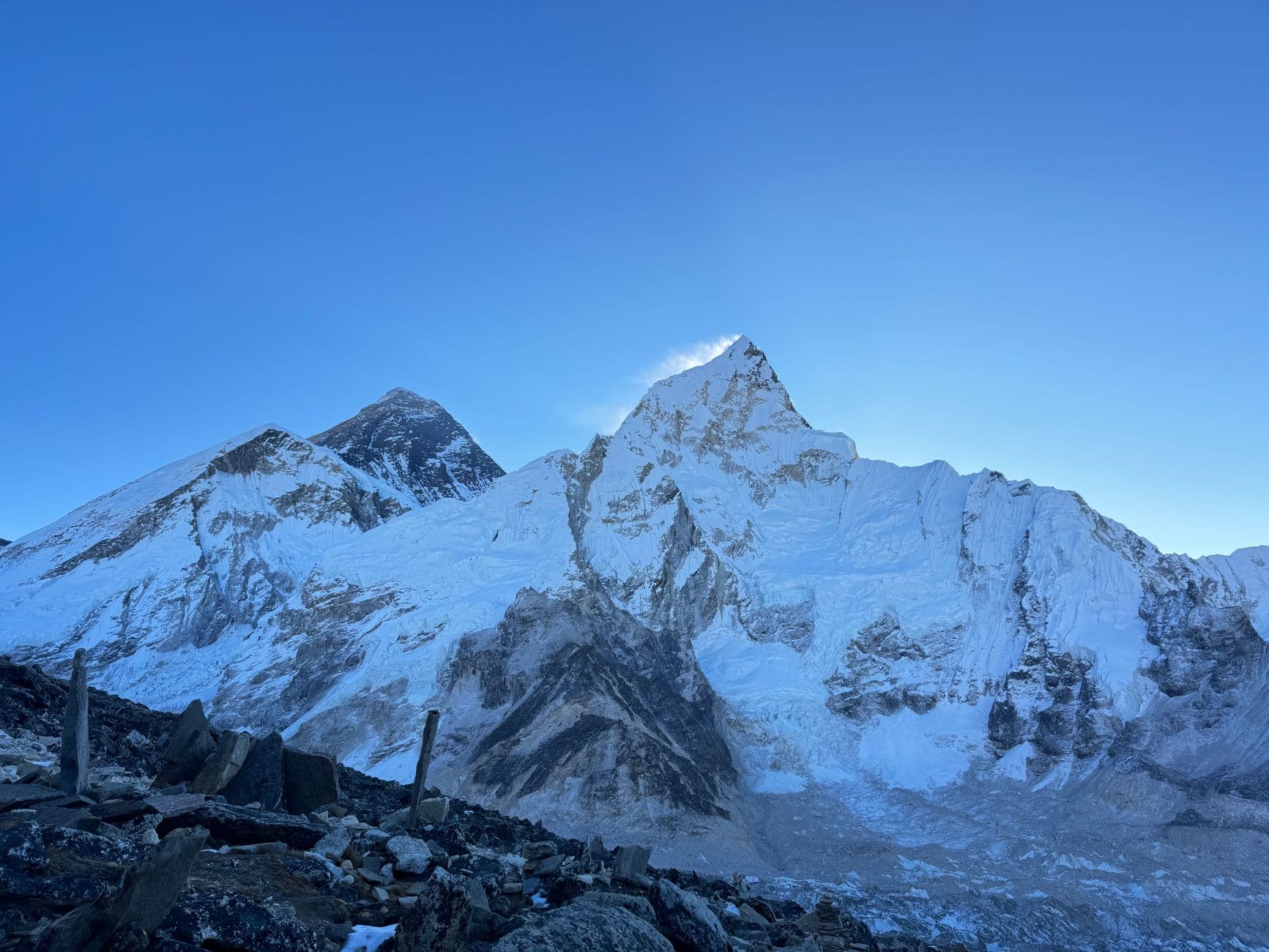
We have been walking people to Everest Base Camp for thirty years, and we can tell you that almost nobody who dreams about it actually knows what the fortnight involves. They know the photograph — the yellow tents, the prayer flags, the Khumbu Icefall tumbling down behind — but not the days that get you there. So here is the honest guide we would give a cousin who called and said, “I think I want to do this.” No sales pitch, just what the trek is really like and what you need to know before you commit.
What the trek actually is
Everest Base Camp sits at 5,364 metres in the Khumbu region of eastern Nepal. You do not climb Everest — Base Camp is where the mountaineers set up before their ascent, and reaching it is the goal for trekkers. The classic round trip from the mountain airstrip at Lukla takes about twelve days: roughly eight days of walking up with two built-in acclimatisation days, and three coming down. Most people also add a side climb of Kala Patthar (5,545m) the morning after Base Camp, because Base Camp itself does not actually give you a clean view of Everest’s summit — Kala Patthar does, and the sunrise from up there is the photograph people carry home.
It is a teahouse trek, which means you sleep in family-run lodges each night rather than tents, and eat cooked meals — usually the national dish, dal bhat, which you can eat endlessly and which fuels you better than anything else up there. You are never truly in the wilderness; you are walking through a living Sherpa homeland of villages, monasteries and yak trains.
How hard is it, really?
Let us be honest, because this is where people fool themselves. Everest Base Camp is not technical — there is no climbing, no ropes, no ice axe. If you can walk five to seven hours a day on uneven ground, day after day, you can physically do the walking part.
The real difficulty is altitude, and it does not care how fit you are. Above 3,500 metres the air thins fast, and marathon runners get altitude sickness while unfit sixty-year-olds sail through. The trek is built around going slowly enough for your body to adjust — the “walk high, sleep low” acclimatisation days at Namche Bazaar and Dingboche are not rest days you can skip to save time. They are the reason the itinerary works. Every year people who rush get evacuated, and every year the ones who let the mountain set the pace make it.
The mountain rewards patience, not strength. We have turned strong young trekkers back at Dingboche and watched quiet retirees stand at Base Camp a week later. Slow is the whole secret.
The other honest truths: it gets cold — nights at Gorak Shep can drop well below freezing even in peak season. The lodges high up are basic, the rooms are unheated, and the higher you go the more you will cough (the dry, dusty air gives almost everyone the famous “Khumbu cough”). None of this should stop you. It is just worth knowing so you pack and prepare properly.
The Lukla question
Nearly everyone reaches the trailhead by flying into Lukla, whose short, sloped runway is genuinely one of the most dramatic airstrips in the world. The flight is spectacular and the landing is a story you will tell forever. But you should know two things.
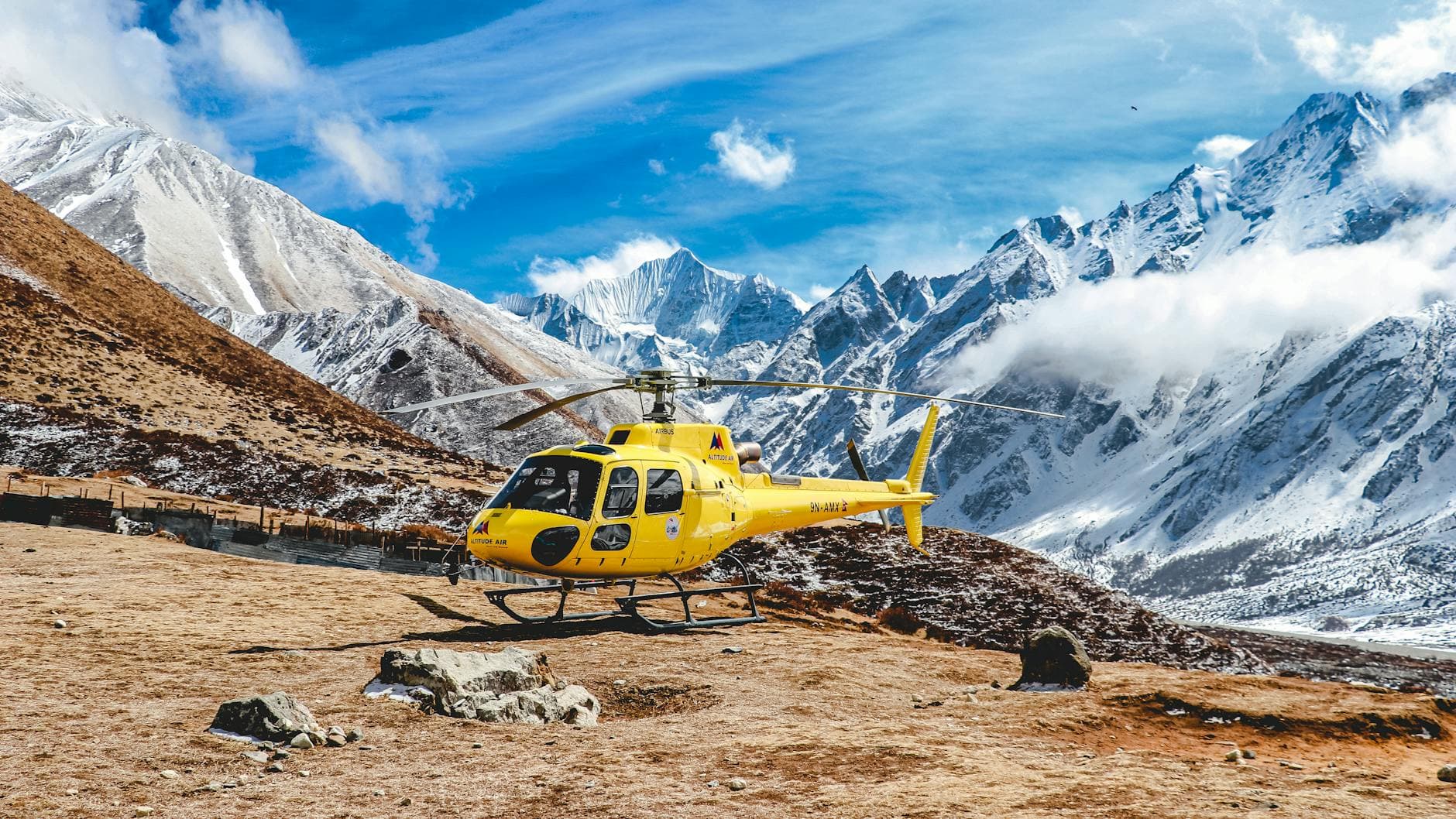
First, Lukla flights are weather-dependent and cancel often, especially in the busy seasons. Build a buffer day or two into your trip so a cancelled flight does not eat your whole schedule. Second, in the peak months, fixed-wing flights to Lukla frequently now depart from Ramechhap (Manthali) rather than Kathmandu, which means a pre-dawn road transfer of four to five hours before you even fly. We will always tell you the current situation honestly when you book, because a surprise 3am departure is not the way to start a holiday. Helicopter transfers are the alternative for those who would rather skip the uncertainty — pricier, but reliable.
A realistic 12-day itinerary
This is the classic, sensible version. The two acclimatisation days are non-negotiable.
- Day 1 — Fly to Lukla (2,860m), trek to Phakding (2,610m). A gentle half-day to find your legs.
- Day 2 — Trek to Namche Bazaar (3,440m), crossing the high suspension bridges above the Dudh Koshi. The final climb to Namche is the first real test.
- Day 3 — Acclimatisation day at Namche. A short walk up toward the Everest View Hotel for your first sight of the mountain, then back down to sleep. Namche is a wonderful hillside town — bakeries, gear shops, and the last hot showers worth the money.
- Day 4 — Trek to Tengboche (3,860m), home to the most important monastery in the Khumbu. If the afternoon clouds clear, the view of Ama Dablam from here is unforgettable.
- Day 5 — Trek to Dingboche (4,410m). The landscape opens out; the trees are behind you now.
- Day 6 — Acclimatisation day at Dingboche. A climb up Nangkartshang for the views, then rest.
- Day 7 — Trek to Lobuche (4,940m), passing the stone memorials to climbers who died on Everest — a sobering, moving stretch.
- Day 8 — Trek to Gorak Shep (5,164m), drop your bag, and push on to Everest Base Camp (5,364m). You made it. Back to Gorak Shep to sleep.
- Day 9 — Pre-dawn climb to Kala Patthar (5,545m) for sunrise on Everest, then a long descent to Pheriche.
- Days 10–11 — Descend to Namche, then to Lukla. Coming down is faster but harder on the knees.
- Day 12 — Fly back to Kathmandu.
Shorter itineraries exist, but they cut acclimatisation and we will not run them — it is not worth the risk to your health or your trip.
Best time to go
Two windows stand well above the rest. Autumn (late September to November) brings the clearest, most stable skies of the year and is the single most popular season. Spring (March to May) is nearly as good, warmer lower down, with rhododendron forests in bloom on the early days and the mountaineering teams filling Base Camp with life and colour. Winter is clear but bitterly cold and some high lodges close; the summer monsoon brings cloud, rain and leeches lower down. If you have a choice, aim for October or April.
What it costs — honestly
We will give you the real picture rather than a number designed to hook you. An organised Everest Base Camp trek covers your Lukla flights, permits, a licensed guide, porter support, and all lodging and meals on the trail. Independent budget trekkers can do it for less by carrying their own bags and going guideless, but the Khumbu now requires a licensed guide for most trekkers, and the savings are smaller than people expect once you add flights and permits.
The two permits you will need are the Khumbu Pasang Lhamu Rural Municipality permit and the Sagarmatha National Park entry permit. Where you will genuinely overpay is by booking through an overseas agency that subcontracts the whole thing to a Kathmandu operator anyway — you pay their margin on top. Booking Kathmandu-direct with a family firm like ours means your money goes to the guides and porters who actually carry you up, not to a middleman. Tell us your dates and group size and we will give you an honest quote — no inflated “was/now” pricing games.
Who it is for — and who should think twice
If you are reasonably fit, willing to walk for two weeks, and you respect the altitude, Everest Base Camp is one of the great experiences of a lifetime and you do not need to be an athlete. We have guided pilgrims in their late sixties to Base Camp and back, happily.
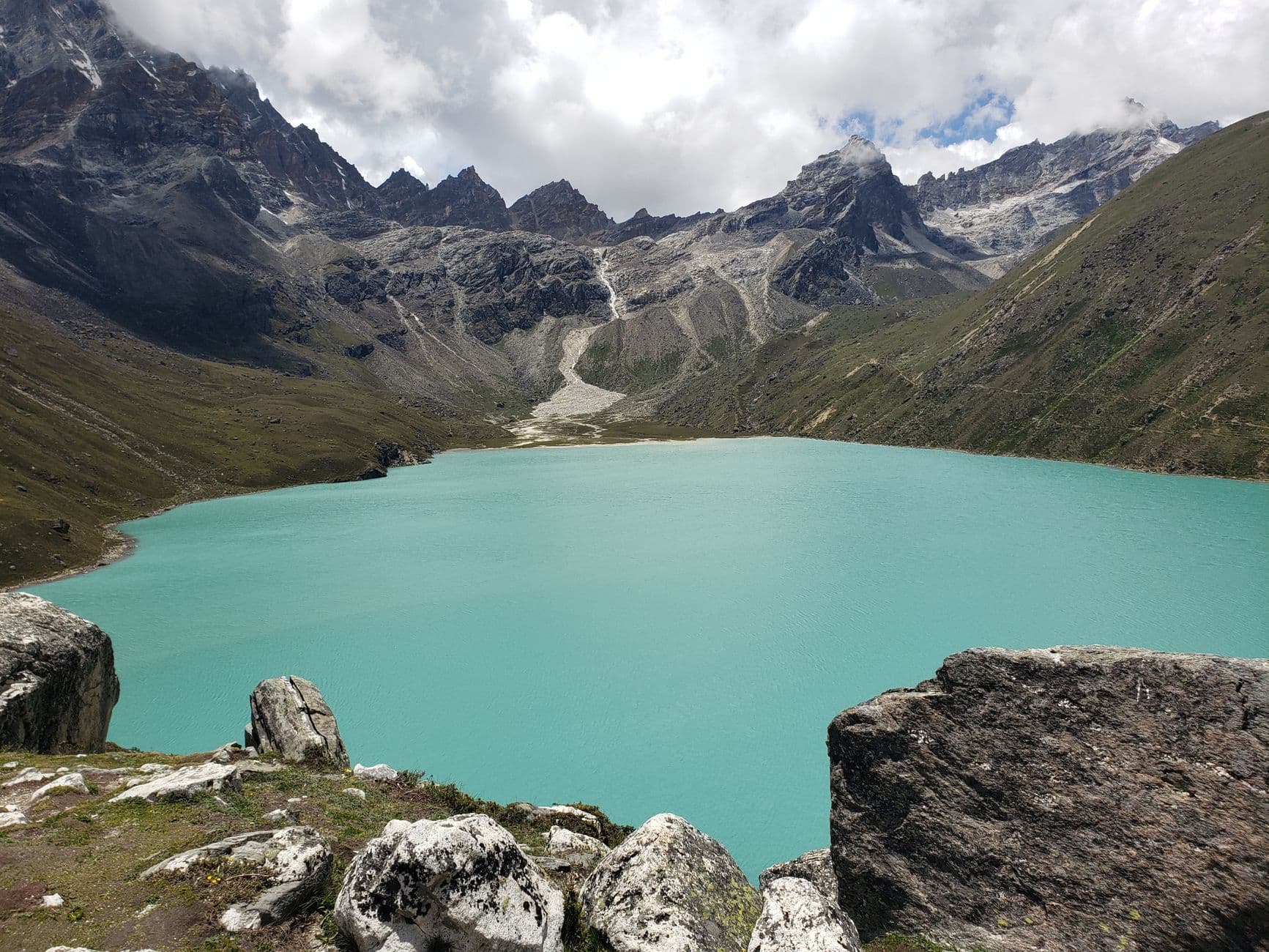
Think twice if you have a serious heart or lung condition (talk to your doctor first), if you truly cannot spare a buffer for weather delays, or if the idea of unheated rooms and cold nights genuinely ruins a trip for you. In that last case, the Everest Helicopter Tour or the gentler Gokyo Lakes route may suit you better, and we are happy to talk you through both.
A few honest tips before you go
Everest Base Camp is the trek that people build a whole year around, and when it is done well it more than lives up to the dream. If you are ready to start planning yours, we have been doing this as a family since 1996 — come and talk to us, and we will build the trip honestly around you.